Last Updated on March 30, 2026
In the high-pressure business environment in Malaysia, even a simple “System Error” or “Toner Empty” alert can derail operations at the worst possible moment. For SMEs, these aren’t just technical issues—they signal a deeper inefficiency in how office infrastructure is managed.
Most businesses still treat copier purchases as a procurement decision. In reality, it’s a capital allocation strategy. Owning office equipment ties up cash, depreciates quickly, and introduces unpredictable costs—turning what looks like an asset into a financial liability.
The Hidden Cost of Printer Ownership: The RM500 “Ink Trap”
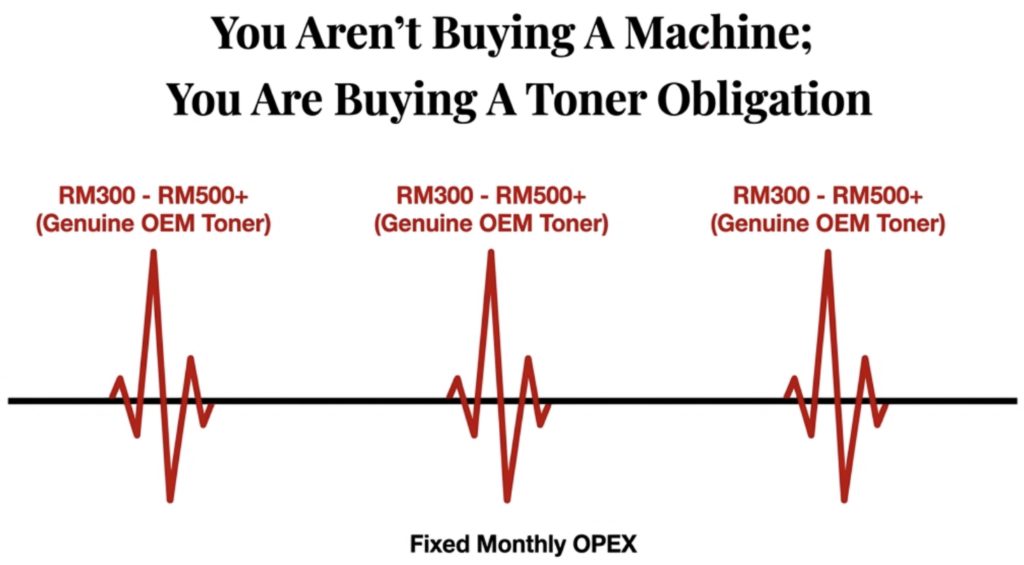
Many SMEs underestimate the ongoing cost of maintaining printers. While the upfront purchase is obvious, the recurring cost of toner and consumables is where cash flow takes a hit.
In Malaysia, mid-range office printers (MFPs) typically require:
- RM300–RM500 for black toner cartridges
- RM700+ for color toner
These costs align with global findings that printer consumables often exceed the original hardware cost over time, as highlighted in this .
The issue isn’t just cost—it’s unpredictability. These “lumpy expenses” disrupt cash flow, especially when multiple machines require replacement at once.
Better model: Copier rental services like The Copier Guy bundle toner and maintenance into a fixed monthly fee, eliminating surprise expenses and stabilizing operating costs.
CAPEX vs OPEX: Why Smart SMEs Are Switching
Modern SMEs are shifting from CAPEX (buying assets) to OPEX (subscription-style models)—not just to save money, but to improve agility.
| Comparison | Buying (CAPEX) | Renting (OPEX) |
|---|---|---|
| Initial Cost | High upfront investment | Zero upfront cost |
| Asset Risk | Rapid depreciation | No ownership risk |
| Tax Treatment | Capital allowances over years | Fully deductible expenses |
| Maintenance | Separate, unpredictable | Included |
| Cash Flow | Large one-time outflow | Predictable monthly |
This shift is supported by financial best practices showing that OPEX models improve liquidity and operational flexibility, as explained in this .
Bottom line: cash in hand is more valuable than equipment on paper.
The Real Cost of Downtime: Why It’s More Than Just an IT Problem
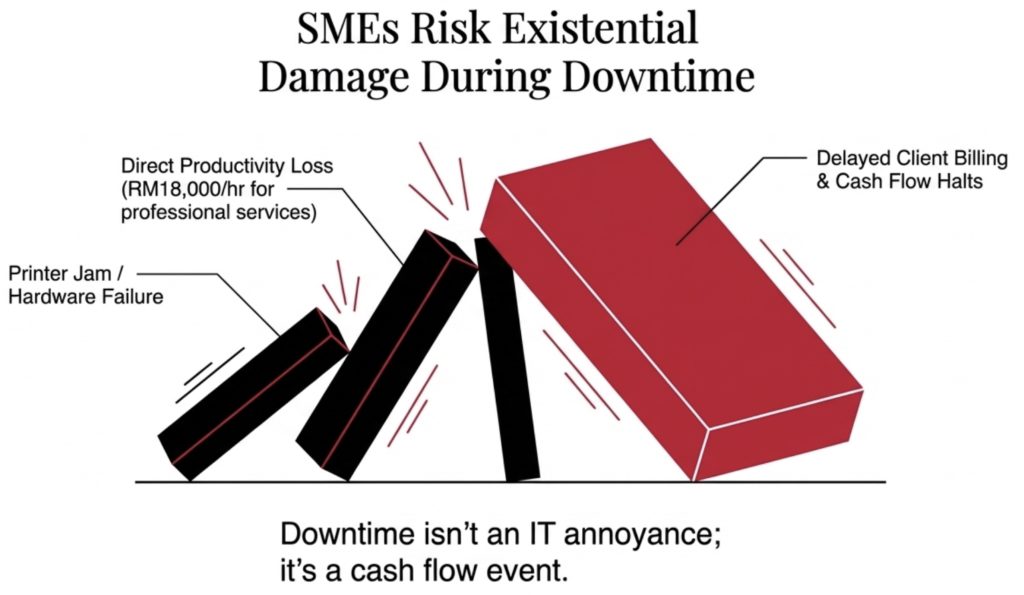
Downtime isn’t just inconvenient—it’s expensive.
Industry research shows downtime can cost:
- $10,000+ per hour for SMEs
- Up to $100,000+ per hour for larger operations
These figures are consistent with findings from this .
Example: A Petaling Jaya Professional Firm
- 10 staff × RM100/hour productivity
= RM1,000/hour direct loss
That’s just the baseline. It excludes:
- Missed billable hours
- Delayed client deliverables
- Reputational damage
In reality, the long-term cost is much higher.
Key takeaway: Fast support isn’t a luxury—it’s risk management.
Malaysian Tax Reality: What SME Owners Often Get Wrong
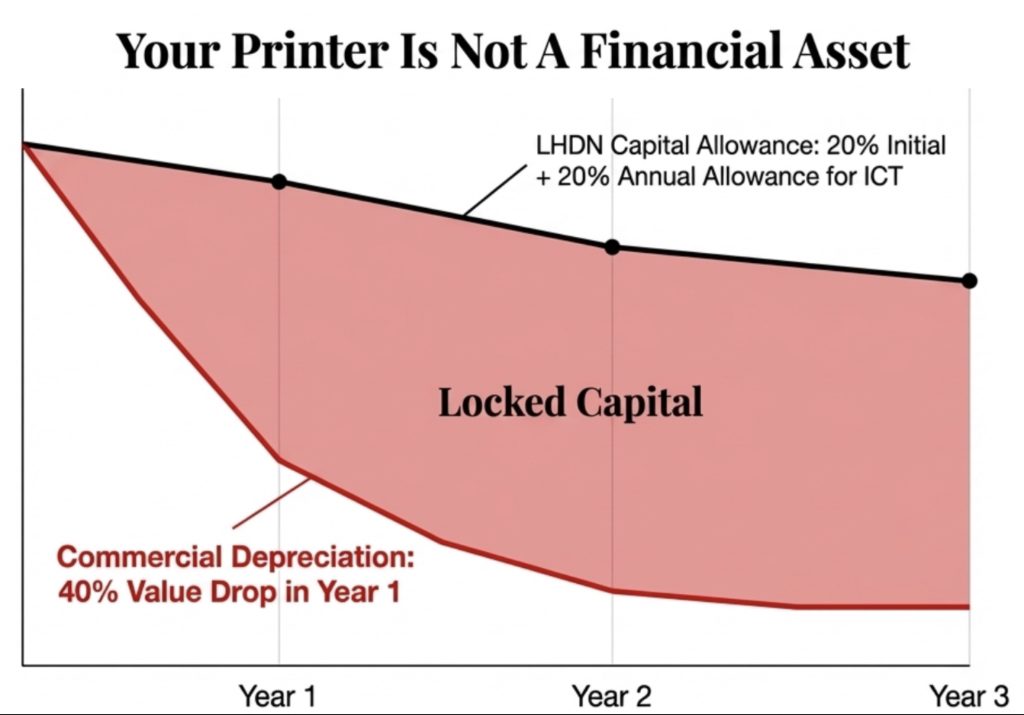
Many business owners misunderstand how equipment is treated for tax purposes.
According to :
- No reliance on accounting depreciation
- Tax deductions follow Capital Allowances rules
Key Points:
- ICT equipment:
- 20% Initial Allowance (IA)
- 20% Annual Allowance (AA)
- Assets under RM2,000:
- Eligible for 100% write-off (with limits unless SME-qualified)
Refer to this for full details.
Implication: Buying equipment delays your tax benefits, while rental payments are typically fully deductible immediately.
The Smarter Alternative: Copier Rental for SMEs
Modern copier rental solutions like The Copier Guy offer:
- Zero upfront cost (starting ~RM88/month)
- Free toner and maintenance
- On-site support
- Flexible upgrades
- Scalable plans (from startups to corporate use)
The Copier Guy even offer rent-to-own models, combining flexibility with long-term asset building. Contact The Copier Guy to learn more.
Rethinking Ownership: Access Beats Assets
In today’s economy, efficiency comes from access, not ownership.
Locking thousands of ringgit into depreciating equipment:
- Reduces liquidity
- Limits growth opportunities
- Adds operational risk
Meanwhile, a rental model:
- Preserves cash
- Stabilizes expenses
- Reduces downtime risk
So the real question is:
Is your copier helping your business scale—or quietly draining your capital?
References
- Income Tax Act 1967 (Schedule 3 – Capital Allowances Overview)
https://kpmg.com.my/kpmg/publications/tax/22/a0053sc003.htm - Income Tax (Accelerated Capital Allowance) (ICT Equipment) Rules 2018 – P.U.(A) 156/2018
https://lom.agc.gov.my/act-view.php?no=P.U.+%28A%29+156%2F2018&type=pua - LHDN Public Rulings (Official Guidelines on Tax Treatment)
https://www.hasil.gov.my/en/legislation/public-rulings/ - Malaysia Capital Allowance Schedule 3 Explained (Including Small Value Assets Rule)
https://ancgroup.biz/malaysia-capital-allowance-sch3/ - Capital Allowance vs Depreciation (Malaysia Tax Treatment Explained)
https://www.cleartax.com/my/en/capital-allowance - Capital Allowances and Tax Treatment of Assets (PwC Malaysia)
https://www.pwc.com/my/en/publications/mtb/capital-allowances.html - Ricoh Toner Cartridge Pricing (Malaysia Office Supply Listings)
https://www.officedepot.com.my/toner-and-ink/toner-cartridges-printer-drum/ricoh-toner-cartridges - Original Ricoh Toner Product Listings (Malaysia Supplier)
https://www.allprinters.my/products/Original-Ricoh-Printer-Toners